
Propertis of Thermal Insulation Materials.
Abhijit.S.Musale
www.abhijitsmusale.com | August.2025
Keywords
Piping Insulation
Insulation
Insulation Material
Thermal Insulation
Insulation Properties
Summary
The primary objective of this article is to provide a concise overview of the properties of thermal insulation materials, along with the relevant standards employed to evaluate and measure these insulation characteristics. In industrial process plants, hot piping systems require thermal insulation to minimize heat and energy losses. The application of insulation serves two principal purposes: conserving thermal energy and safeguarding personnel from accidental contact with high-temperature surfaces. A wide range of insulation materials is available in the market, each possessing distinct properties that facilitate comparative assessment. This article systematically outlines the key properties of thermal insulation materials, explains their significance, and identifies the corresponding standards associated with each property. I posted same article on linkedIn some years ago in 2021 in the form of pdf file. This article is a reproduction of the same with some datails updated.
Introduction
Insulation materials have played a significant role in industrial development since the earliest stages of human civilization. Prehistoric communities utilized naturally available resources such as animal furs, skins, wool, eelgrass, clay, straw, and even dried manure to shield themselves from extreme climatic conditions. With the advancement of human societies and the onset of the industrial age, synthetic insulation materials were developed to address diverse industrial demands. In contemporary practice, materials such as mineral wool, calcium silicate, fiberglass, perlite, cellular glass, foam glass, and polyurethane foam are widely employed across industries. Despite the variety of insulation materials available, their selection is generally based on a set of common properties that enable systematic comparison and evaluation.
This article highlights several key properties of insulation materials, noting that the relevance of each property varies depending on the specific application. While certain characteristics may be negligible in some contexts, they can be critical in others. To facilitate systematic evaluation and selection, the following table presents a comprehensive list of insulation material properties.
| No | Insulation Properties | Unit | ASTM Standard | Description |
|---|---|---|---|---|
| 01 | Maximum Usage Temperature | Deg C | ASTM C447 | Standard Practice for Estimating the Maximum Use Temperature of Thermal Insulations |
| 02 | Thermal Conductivity | W/mK | ASTM C335 | Standard Test Method for Steady-State Heat Transfer Properties of Horizontal Pipe Insulation |
| 03 | Density | kg/m³ | ASTM C302 | Standard Test Method for Density and Dimensions of Preformed Pipe-Covering-Type Thermal Insulation |
| 04 | Friability / Mass lose by tumbling | kg | ASTM C421 | Standard Test Method for Tumbling Friability of Preformed Block-Type and Preformed Pipe-covering-Type Thermal Insulation |
| 05 | Sag resistance (Thickness Change) | mm | ASTM C167 | Standard Test Methods for Thickness and Density of Blanket or Batt Thermal Insulations |
| 06 | Compressive Resistance | kPa | ASTM C165 | Standard Test Method for Measuring Compressive Properties of Thermal Insulations |
| 07 | Flexural Resistance | kPa | ASTM C203 | Standard Test Methods for Breaking Load and Flexural Properties of Block-Type Thermal Insulation |
| 08 | Linear Shrinkage | mm | ASTM C356 | Standard Test Method for Linear Shrinkage of Preformed High-Temperature Thermal Insulation Subjected to Soaking Heat |
| 09 | Hot Surface Performance: Warpage | mm | ASTM C411 | Standard Test Method for Hot-Surface Performance of High-Temperature Thermal Insulation |
| 10 | Hot Surface Performance: Cracking | - | ||
| 11 | Surface burning characteristics: Flame spread index | - | ASTM E84 | Standard Test Method for Surface Burning Characteristics of Building Materials |
| 12 | Surface burning characteristics: Smoke density index | - | ||
| 13 | Water Vapor Permeability | g/s.m.Pa | ASTM E96 | Standard Test Methods for Water Vapor Transmission of Materials |
| 14 | Water Vapor Sorption / Capillarity / Absorptive | % | ASTM C1104 | Standard Test Method for Determining the Water Vapor Sorption of Unfaced Mineral Fiber Insulation |
| 15 | Odor Emissions | - | ASTM C1304 | Standard Test Method for Assessing the Odor Emission of Thermal Insulation Materials |
| 16 | Chemical Reaction / Alkalinity / pH | - | ASTM C871 | Standard Test Methods for Chemical Analysis of Thermal Insulation Materials for Leachable Chloride, Fluoride, Silicate, and Sodium Ions |
| 17 | Resistance of sound / Sound Transmission Lose value | - | ASTM E90 | Standard Test Method for Laboratory Measurement of Airborne Sound Transmission Loss of Building Partitions and Elements |
Maximum Usage Temperature
The maximum service temperature of an insulation material refers to the highest temperature at which it can be safely employed without compromising its structural integrity, chemical composition, physical form, or mechanical strength. However, a precise universal value cannot be assigned, as the permissible operating temperature is influenced by multiple factors, including the intended application, material grade and composition, heating rate, and thickness. Therefore, manufacturers are expected to specify the maximum usage temperature for each product grade to ensure appropriate selection and safe application.
ASTM C447 (Standard Practice for Estimating the Maximum Use Temperature of Thermal Insulation) provides guidelines for determining and testing the upper temperature limits of insulation materials. This standard is applicable to a wide range of insulation forms, including blankets, loose wool, mineral wool, blocks, boards, and molded pipe sections. However, it does not prescribe fixed criteria for establishing specific temperature values for individual materials. Instead, each material must be evaluated under the intended service conditions to ensure acceptable performance. If the insulation exhibits distortion, degradation, or fails to withstand the required temperature for the desired service duration, a lower operating temperature should be designated as its maximum usage limit. Ultimately, the usage temperature must be verified by the manufacturer and mutually agreed upon with the end user to ensure reliability and safety in application.
Thermal Conductivity
Thermal conductivity is a critical parameter in determining the required thickness of insulation materials. It reflects the material’s ability to transfer heat, with higher conductivity necessitating greater thickness to achieve effective thermal resistance. A variety of standardized testing methods are available to evaluate thermal conductivity, depending on the geometry and form of the insulation material. Several of these standards are outlined below to guide accurate measurement and comparison.
ASTM C177 (Standard Test Method for Steady-State Heat Flux Measurements and Thermal Transmission Properties by Means of the Guarded-Hot-Plate Apparatus) is primarily employed for evaluating insulation materials in the form of flat boards and mats, utilizing the guarded hot plate technique. Detailed descriptions of the method—including procedures, apparatus specifications, and specimen preparation—are extensively documented in the standard and related literature. Consequently, these details are not elaborated here, and readers are advised to consult the official standard for comprehensive guidance.
ASTM C335 (Standard Test Method for Steady-State Heat Transfer Properties of Horizontal Pipe Insulation) is specifically designed for evaluating insulation materials manufactured in the form of pipe covers and intended for pipe applications. The testing apparatus employed in this method is a modified version of the guarded hot plate system, adapted into a cylindrical configuration to accommodate the geometry of pipe insulation.
ASTM C518 (Standard Test Method for Steady-State Thermal Transmission Properties by Means of the Heat Flow Meter Apparatus) is another standard that gives guidelines to determine thermal transmission properties.
Density
Density is defined as the mass of a material per unit volume, typically expressed in kg/m³. For certain insulation materials, higher density is often associated with increased thermal conductivity, which in turn requires greater thickness to achieve effective heat containment. Consequently, the use of high-density materials can significantly increase the overall weight of the insulation system. In such cases, lower-density alternatives are generally preferred. However, it is important to note that reduced density does not universally correspond to lower thermal conductivity; the relationship is highly dependent on the specific material composition and structure.
ASTM C302 (Standard Test Method for Density and Dimensions of Preformed Pipe-Covering-Type Thermal Insulation) specifies procedures for determining the density of pipe insulation materials. As indicated by its title, this method is tailored for preformed pipe-covering insulation. The standard outlines detailed procedures for specimen measurement, including dimensional assessments to calculate volume, permissible tolerances, weight determination, formulas for computing the volume of molded sections, and requirements for reporting precision and bias. In essence, the method involves measuring the specimen’s volume and mass to derive its density in a systematic and standardized manner.
Friability / Mass lose by tumbling
Friability is a property of solid insulation materials that reflects their tendency to disintegrate into smaller fragments when subjected to mechanical stresses such as tumbling, cyclic loading, abrasion, or thermal expansion and contraction. Materials with high friability gradually lose mass over extended service periods due to repeated dynamic thermal movements on hot surfaces, thereby diminishing their effectiveness as insulation. Although friability testing is most commonly associated with the pharmaceutical industry for evaluating the durability of tablets, similar principles can be applied to insulation materials. The apparatus used for such testing is illustrated in the figure below.
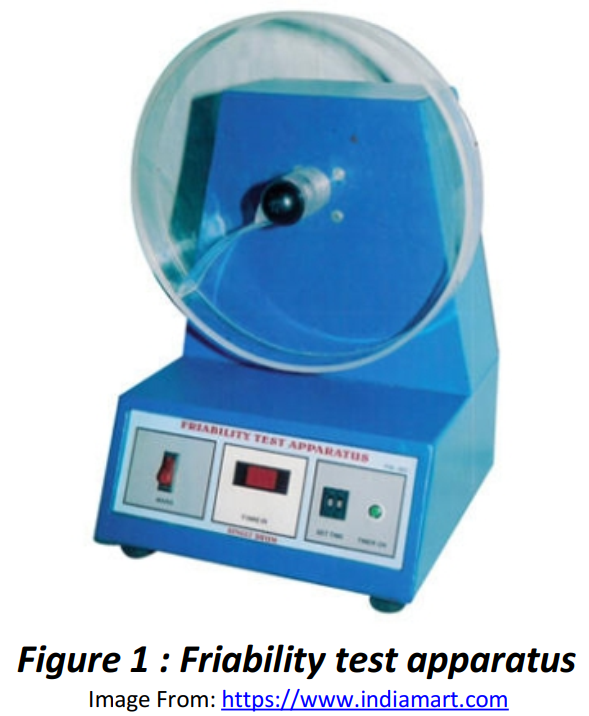
ASTM C421 (Standard Test Method for Tumbling Friability of Preformed Block-Type and Preformed Pipe-covering-Type Thermal Insulation) outlines procedures for evaluating the friability of insulation materials. The method employs equipment similar to that used in pharmaceutical friability testing, but instead of a circular vessel, it specifies the use of a square box with defined dimensions. Specimens of insulation material, prepared to prescribed sizes, are placed in the box along with wooden cubes of standardized dimensions. The box is then rotated at a specified speed and number of revolutions. Following the test, the largest remaining specimens are collected and weighed, and the percentage loss of mass is calculated to quantify the friability of the material. For detailed procedures, calculations, and reporting requirements, reference should be made directly to the standard document.
Sag Resistance (Thickness Change)
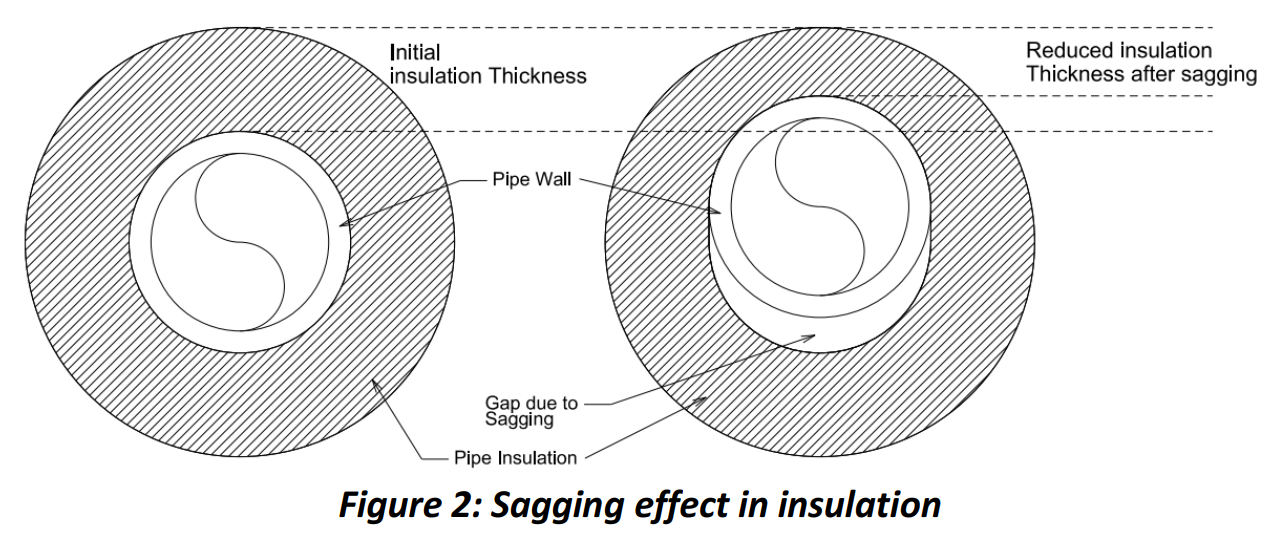
Certain insulation materials, particularly fibrous types such as mineral wool and glass wool, exhibit changes in thickness over extended service durations. These distortions arise from external influences including variable mechanical loads and thermal expansion–contraction cycles of the insulated surfaces. As a result, the effective thickness required for thermal resistance is reduced, leading to diminished insulation performance and increased heat loss. The ability of a material to maintain its shape and resist deformation or sagging under such conditions is referred to as sag resistance.
The figure below illustrates the phenomenon of insulation sagging around a pipe section. At the time of installation, the insulation typically maintains a uniform thickness surrounding the pipe. However, after prolonged service, this uniformity is lost, and the thickness becomes uneven due to material deformation, thereby reducing the effectiveness of the insulation system.
ASTM C167 (Standard Test Methods for Thickness and Density of Blanket or Batt Thermal Insulations) provides standardized procedures for measuring the thickness of insulation materials. A simple depth gauge with a pointed tip, capable of penetrating the insulation and contacting the underlying rigid surface, can be employed to obtain thickness measurements at multiple locations. The standard specifies detailed methodologies, including measurement procedures, sampling techniques, spacing between measurement points, as well as the precision and tolerances to be considered. It also outlines calculation methods and reporting requirements. For comprehensive instructions and exact procedural details, reference should be made to the official standard document.
Compressive Strength
Certain insulation materials, such as calcium silicate and perlite, are rigid in nature and possess measurable compressive strength. Under the application of high mechanical loads, these materials may fracture. The capacity of such insulation materials to withstand compressive forces without failure is referred to as compressive strength.
ASTM C165 (Standard Test Method for Measuring Compressive Properties of Thermal Insulation) provides standardized procedures for determining the compressive strength of insulation materials. The test distinguishes between two types of material behavior: (1) materials that exhibit an approximately linear relationship between applied load and deformation, where deformation increases proportionally with load, and (2) materials that become progressively stiffer as the load increases, a characteristic commonly observed in fibrous insulations such as rock wool and glass wool. The procedure involves preparing specimens of prescribed dimensions and subjecting them to controlled loading using a compressive testing machine—either hydraulic or mechanical. Load is applied until the desired deformation limit is reached, and the resulting data are used to construct a load–deformation curve, from which the compressive strength of the material is determined.
Flexural Resistance/ Breaking Load
Breaking strength is the ability of an insulation material to resist bending or fracture under applied mechanical stress. This property is characteristic of rigid insulation materials such as calcium silicate, perlite, and cellular glass, whereas loose fibrous materials like mineral wool and glass wool do not exhibit measurable breaking strength. The testing apparatus used to evaluate this property is shown in the figure below, where the dark gray slab positioned on the machine represents the insulation specimen (likely foam glass).
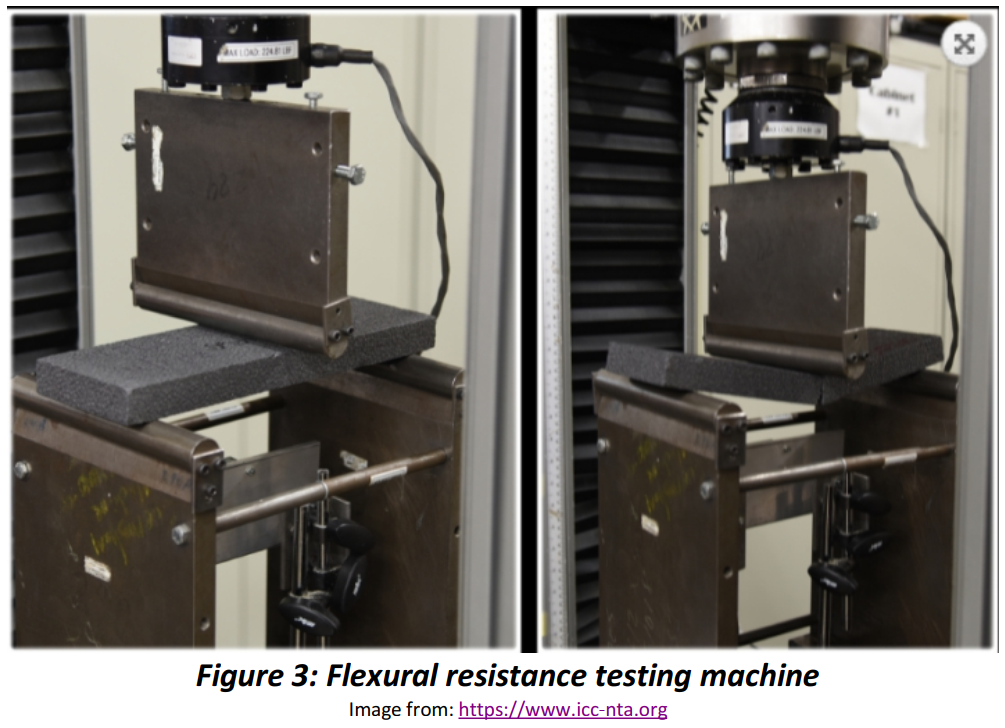
ASTM C203 (Standard Test Methods for Breaking Load and Flexural Properties of Block-Type Thermal Insulation) specifies procedures for evaluating the breaking strength and flexural properties of rigid insulation materials. The standard describes two test methods (Method I and Method II) and four procedures (A, B, C, and D), which can be applied in combination depending on the material type and testing requirements. The distinction between the two methods lies in the manner in which the specimen is loaded on the bending test machine, while the four procedures address different material behaviors. Procedure A is intended for materials that exhibit minimal deflection and fracture quickly, such as calcium silicate and perlite. Procedure B applies to materials that undergo large deflections before breaking. Procedure C evaluates properties under a constant stress rate, whereas Procedure D assesses properties under a constant strain rate. For detailed procedures, calculations, and reporting requirements, reference should be made directly to the standard document.
Linear Shrinkage
Dimensional stability under thermal loading is an important property of insulation materials. Preformed insulation products, which are manufactured in specific shapes to fit equipment and complex surfaces, often exhibit dimensional changes when exposed to elevated temperatures. Under such conditions, these materials may shrink or deform, compromising their intended fit and reducing their effectiveness in service.
ASTM C356 (Standard Test Method for Linear Shrinkage of Preformed High-Temperature Thermal Insulation Subjected to Soaking Heat) provides procedures for determining the linear shrinkage of insulation materials under thermal exposure. The method involves preparing specimens of prescribed dimensions and characteristics, which are then subjected to controlled heating in a furnace at specified temperatures. As the specimens absorb heat, dimensional changes—primarily shrinkage—develop. Different insulation materials exhibit varying degrees of shrinkage depending on their composition and structure. After the heating cycle, the specimens are cooled, and post-test measurements are compared with the original dimensions to quantify the extent of linear shrinkage. For detailed instructions on specimen preparation, measurement techniques, apparatus arrangement, test temperatures, calculation methods, and precision requirements, reference should be made directly to the standard document.
Hot surface performance: Warpage and Cracking
Warpage is a property of insulation materials that describes their tendency to twist, distort, or develop surface cracks when exposed to thermal loading. Unlike shrinkage, which involves a reduction in dimensions and overall volume, warpage occurs without significant volume loss; instead, the specimen’s shape is altered. This distortion can compromise the fit and effectiveness of preformed insulation products. The figures below illustrate warpage in a rectangular block: the first figure shows a specimen in its original condition, while the subsequent figures depict warped specimens after thermal exposure.
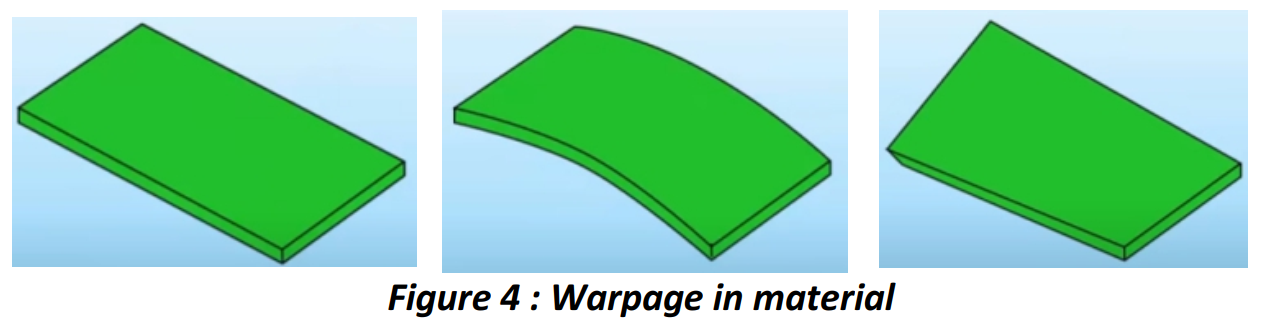
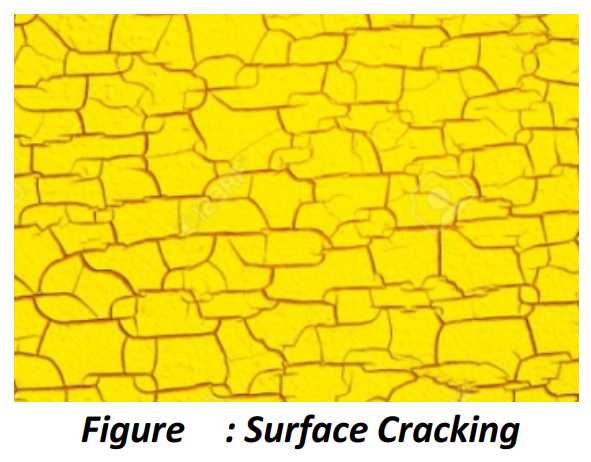
Surface cracking is another form of degradation that can occur in insulation materials when subjected to prolonged or high-intensity thermal exposure. Such cracks compromise the integrity of the insulation layer, reducing its effectiveness and potentially leading to increased heat loss. The figure below illustrates the occurrence of surface cracking on an insulation specimen after thermal loading.
ASTM C411 (Standard Test Method for Hot-Surface Performance of High-Temperature Thermal Insulation) provides detailed procedures for evaluating the performance of insulation materials when exposed to elevated surface temperatures. The standard specifies requirements for specimen preparation, apparatus configuration, measurement techniques, and the recording of test data. It also outlines tolerances, biases, and reporting guidelines to ensure accuracy and consistency. For comprehensive instructions and calculation methods, reference should be made directly to the official standard document.
Surface Burning Characteristics: Flame Spread Index
The Flame Spread Index is a measure of the burning behavior of materials, determined by observing the rate at which flames propagate across the surface of a specimen under controlled test conditions. It provides a comparative indication of how quickly fire can spread over the material’s surface, making it a critical parameter in assessing fire safety performance.
ASTM E84 (Standard Test Method for Surface Burning Characteristics of Building Materials) describes the procedure for determining the flame spread index of materials. Commonly referred to as the “tunnel test,” this method involves mounting the specimen in the ceiling of a test chamber and igniting it at one end. The flame then propagates along the bottom surface of the specimen. The flame spread index is calculated based on the distance and rate of flame travel over a specified time interval. This provides a comparative measure of how rapidly and extensively flames spread across the material surface. For detailed formulas, calculations, apparatus setup, and procedural requirements, reference should be made directly to the standard document.
Surface burning Characteristics : Smoke Density Index
Smoke density is a comparative measure derived from smoke obscuration data collected during surface burning tests. It indicates the extent to which an insulation material produces dense smoke when subjected to combustion, and consequently, how visibility is impaired in such conditions. This property is critical for evaluating fire safety performance, as materials that generate higher smoke density can significantly reduce visibility and hinder evacuation during fire incidents.
ASTM E84 (Standard Test Method for Surface Burning Characteristics of Building Materials) provides procedures for determining both the flame spread index and the smoke development index of materials. In this test, the specimen is mounted in a tunnel furnace with a controlled ceiling arrangement. The apparatus includes a light source and photocells that measure the intensity of transmitted light. When the specimen ignites and produces smoke, the light beam becomes obscured, and the photocells record time versus light intensity data. From this data, a curve is generated, and the area under the curve is compared with that of reference materials. Using prescribed formulas, the smoke development index is calculated, while the flame spread index is determined from the rate of flame propagation. Importantly, the smoke index reflects the degree to which visibility is reduced due to smoke generation; however, it does not provide information about the chemical toxicity of the smoke or its physiological effects, which depend entirely on the material’s composition.
Water Vapor Permeability
Water vapor permeability is defined as the time rate of water vapor transmission through a unit area of flat material of unit thickness, induced by a unit vapor-pressure difference between two specific surfaces under controlled temperature and humidity conditions. This property provides a measure of how readily water vapor can pass through insulation materials, thereby influencing their effectiveness in moisture control and long-term durability.
ASTM E96 (Standard Test Methods for Water Vapor Transmission of Materials) provides detailed procedures for determining the water vapor permeability of materials. The standard describes two primary approaches: the desiccant method and the water method. In both cases, a small vessel is partially filled with either desiccant or water, and the test material is sealed over the vessel opening. The vessel is then placed under controlled environmental conditions, and its weight is recorded at specified time intervals. In the desiccant method, the vessel’s weight increases over time if the test material allows significant vapor transmission. Conversely, in the water method, the vessel’s weight decreases as vapor passes outward through the material. The weight-versus-time data are analyzed to quantify the rate of vapor transmission. For detailed instructions on specimen preparation, apparatus setup, environmental control, formulas, and calculation procedures, reference should be made directly to the standard document.
Water Vapor Sorption / Capillarity / Absorbtivity
Water vapor sorption is a measure of the amount of water vapor absorbed or adsorbed by an insulation material when exposed to high-humidity conditions. This property reflects the material’s tendency to take up moisture from the surrounding environment, which can influence its thermal performance, mechanical integrity, and long-term durability.
ASTM C1104 (Standard Test Method for Determining the Water Vapor Sorption of Unfaced Mineral Fiber Insulation) specifies procedures for evaluating the absorptivity of unfaced fibrous insulation materials, such as mineral wool. It is important to distinguish absorption from permeability: absorption refers to the uptake and retention of vapor or liquid within the material’s structure, resulting in a measurable increase in mass. In contrast, permeability describes the passage of vapor through the material without altering its weight. Highly absorptive insulation materials become heavier after vapor exposure, whereas permeable materials allow moisture to pass through without significant mass change.
The test method described in ASTM C1104 is relatively straightforward. Specimens are prepared according to the dimensions and procedures specified in the standard and then placed in a controlled high-humidity environment for a prescribed duration, typically several hours or days. At regular intervals, the specimen’s weight is measured and recorded to generate a time-versus-weight curve. Over the course of the test, the specimen gains mass as it absorbs water vapor. The percentage change in weight provides a quantitative measure of the material’s absorptivity. For precise details on specimen preparation, measurement techniques, environmental control, and calculation procedures, reference should be made directly to the standard document.
Moisture content
Moisture content is a property of insulation materials that indicates the amount of moisture inherently present within the material itself. Unlike absorptivity, which measures the uptake of vapor from the surrounding environment, moisture content refers to the initial percentage of water or volatile matter contained in the material as part of its composition. When subjected to heating up to a specified temperature, this inherent moisture or volatile fraction evaporates, resulting in a measurable reduction in mass. The moisture content is typically expressed as a percentage of the material’s weight and is an important parameter for evaluating thermal performance, stability, and durability.
ASTM C1616 (Test Method for determining the Moisture content of Organic and inorganic inslation materials by weight.) outlines the procedure for measuring the inherent moisture content of insulation materials. The method is conceptually similar to absorptivity testing but follows the opposite approach. A specimen is prepared according to the dimensions specified in the standard, and its initial weight and dimensions are recorded. The specimen is then placed in an oven and heated to a prescribed temperature. After cooling, the specimen is reweighed and remeasured. The difference between the initial and final readings provides the moisture content value, expressed as a percentage of the specimen’s weight. For detailed instructions on specimen preparation, oven settings, measurement techniques, and calculation procedures, reference should be made directly to the standard document.
Odor Emissions
Odor resistance is an important property of insulation materials, particularly in applications where human health and comfort are critical, such as residential and hospital buildings. This property reflects the material’s ability to prevent the generation of unpleasant odors over long service durations. Odor formation within insulation can result from microbial growth, such as fungi or bacteria, or from the chemical degradation of certain components within the material. Insulation that resists odor development ensures a healthier indoor environment and maintains performance without contributing to air quality concerns as it ages.
ASTM C1304 (Standard Test Method for Assessing the Odor Emission of Thermal Insulation Materials) provides the procedure for evaluating odor resistance in insulation. Since odor is not a quantifiable property, the method relies on sensory judgment by a panel of approximately three to five trained inspectors. Test specimens of specified dimensions are prepared and placed in clean, sealed containers. Each inspector, in turn, opens the container, holds it at a prescribed distance from the nose for a defined duration, and then reseals it. Observations are recorded either verbally or in writing, and the collective judgments form the basis for assessing odor emission. For detailed requirements regarding specimen preparation, test conditions, and reporting procedures, reference should be made directly to the standard document.
Chemical Reaction / Alkalinity / pH
The chemical properties of insulation materials describe their tendency to react with chemicals, gases, or hot surfaces, and are especially important in applications where corrosion protection is a critical requirement. This property indicates whether a material exhibits acidic or basic behavior. When insulation comes into contact with water, it can alter the water’s pH depending on its chemical composition. If the water becomes mildly acidic, it may subsequently interact with metals in equipment or piping, leading to corrosion. Therefore, understanding the chemical reactivity and pH behavior of insulation materials is essential for ensuring long-term durability and preventing corrosion-related failures in service environments.
ASTM C871 (Standard Test Methods for Chemical Analysis of Thermal Insulation Materials for Leachable Chloride, Fluoride, Silicate, and Sodium Ions) provides detailed procedures for determining the chemical reactivity of insulation materials. The standard outlines multiple analytical techniques for identifying and quantifying specific ions, including electrochemical methods, chemical reactions, spectroscopy, and flame photometry. Each method is tailored to detect particular ions such as chlorides, fluorides, silicates, and sodium, which are critical indicators of potential corrosive behavior. While the descriptions of individual procedures are extensive, the essential point is that this standard enables a comprehensive understanding of the chemical properties of insulation materials. For precise formulas, numerical values, and step-by-step procedures, reference should be made directly to the standard document.
Resistance to sound or Sound Transmission Lose Value
Sound absorption is the property of insulation materials that enables them to attenuate sound waves. This characteristic is particularly valuable in the design of acoustic insulation for rooms, theaters, and enclosures surrounding noisy plant equipment. In many engineering applications, design criteria specify permissible noise levels in the range of 70 to 100 dB. Where insulation must function not only as a thermal barrier but also as a sound barrier, its sound absorption capability becomes a critical performance parameter.
ASTM E90 (Standard Test Method for Laboratory Measurement of Airborne Sound Transmission Loss of Building Partitions and Elements) specifies the procedures for evaluating the sound resistance properties of materials and assemblies. The standard provides detailed requirements for test room configuration, including the arrangement of the sound source, placement of microphones, positioning of the specimen, and the method of data collection. Through controlled measurements, the test determines the airborne sound transmission loss, which is a key indicator of a material’s ability to function as a sound barrier. For comprehensive instructions on setup, observation techniques, and calculation methods, reference should be made directly to the standard document.